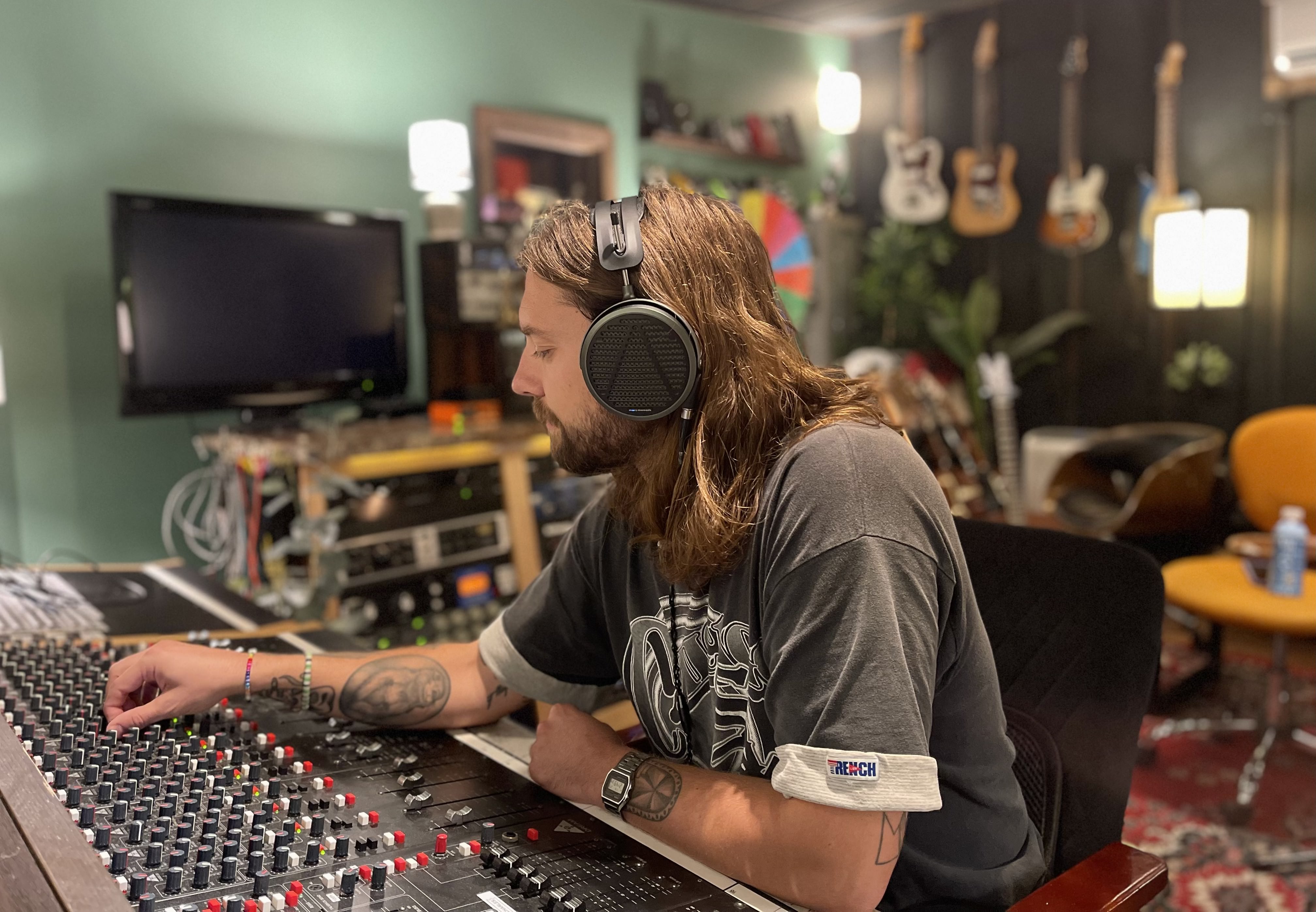
Great mixes don't just balance levels, they evolve. Subtle changes in volume, effects and tone can transform a static recording into something that feels alive. In this guest article, producer, songwriter and engineer Zach Zurn of Carpet Booth Studios (YUNG GRAVY, DURRY, JUICY J) shares why automation has become one of the most important creative tools in his mixing process, and how it helps every song tell its story.
I have a complicated relationship with mixing.
Among all of the record-making processes, it tends to be my least favorite. I think I’m just such a “song” guy - meaning I care so much about a song’s message, storytelling, and emotion coming through that sometimes I want to roll my eyes at the technical necessities mixing requires. I feel tempted, in moments, to just paint with a broad brush on the mix bus to “fix” issues, but if anyone knows what it takes to actually mix a song, they’d scoff at this inclination I have.
But amidst the complaining, I’m a hypocrite. I realize, of course, that taking the multitude of elements a song may require in its production means working through it with a fine-tooth comb - honing in on the discrepancies of certain sound sources while emphasizing the moments and textures that aid the storytelling and emotion. There’s beauty in this.
Making Records Feel Alive
A familiar comment we hear in the music industry is that music consumers want records to feel like the experience they get from seeing an artist live. What a daunting task. How do we make something that was recorded - therefore premeditated in many ways - feel alive?
For me, songs come alive with automation.
Automate to make the mix great
It’s corny as hell, but I say to my interns often: “Automate to make the mix great.” Sorry, but it’s easy to remember. When I started automating years ago, mixing began to feel much more artistic and natural. It finally clicked with me that records that felt like they had a pulse could often thank automation for their animation.
Maybe another corny catchphrase could be: “Automation equals animation.” Meaning that when you automate parameters, it breathes life into a song. And by the way, I’m not just talking about automating volume. Automating wet effect decay times, room mic levels on drums, BGVs widening and narrowing, and filtering are just a few ways I try to bring real life into songs.
Stacking Automations
In EX. 1, you’ll see a ton of automation done on a single moment in the song. It’s just a stacked harmony with some diatonic dissonance to create a little beautiful tension, but the notes weren’t enough. It also wasn’t enough to just throw some delay and reverb on there for me.
Ex. 1 – Layering automation on harmonies to add texture and movement
I really wanted this moment to not peek out then, but to have a tail do some dynamic foreshadowing and swelling/momentum building for this heavier rocky riffy section that comes right after it.
I used some feedback loops on a delay, along with some pitch changing effects done by automating the delay times on this dual delay to give us this growing textural sound. In the original moment, having the BGVs just panned throughout the stereo field was feeling boring, so I decided to use a little panning + stereo width to give them some movement, as well.
Finally, I love what the Sonnox Oxford Inflator adds to tracks and mixes. Here, instead of a volume automation to let the vocal flourish swell up, I more wanted some“weight” and brief, subtle intensity in this moment, so I used the Inflator to do that.
Automating Volume & Drive
This sound found in EX. 2 is just a waves sound that I picked up in a sample pack years ago. DYL’s album is heavily influenced by nautical themes, so I thought it would be an appropriate sound source to use in this situation. Watch for the volume/output and drive automation I use to build, drop, intensify, and calm the bed underneath this mix.
Ex. 2 – Automating distortion and Oxford Inflator pushes and pulls the intensity of this wave sample
I’m a big fan of textures - often non-pitched textures - to give the song and mix a bed to sit on top of. Maybe it’s because silence in the real world freaks me out sometimes, but I’m always wanting to hear/feel something sitting underneath.
Maybe it’s because I tend to think about production in a near-synesthetic way, but more physically - I imagine the sound design and production moves we can make as occupying physical spaces, almost like I can see or feel where they exist in a room.
When we are in physical spaces, it’s rare to not hear an HVAC hum, the rustling of trees, or footsteps from passersby. I crave that realistic sensation in my production, and often foley-esque sounds can do the trick for me.
Automating Sidechain
Elements that are static kill a track for me(of course there are exceptions to this rule). Motion in many ways is big for me.
I’m always searching for that life-like breathing feeling. I want my elements in the track to co-exist in so many ways. For example, in EX. 3, you’ll hear a Jupiter synth sidechained to the acoustic guitar.
All this means is that the volume is ducking away in volume, keyed to the guitar, when the guitar plays. It’s almost like a baton handoff between the two elements in a really pleasing way.
Ex. 3 – Sidechaining this Jupiter synth with the acoustic guitar adds a call and answer counterpoint feel to the arrangement
A second Jupiter synth is sidechained to the kick drum in the louder sections like the chorus and post-chorus, and yet another Jupiter synth in these dynamically larger sections has motion moving left and right. These subtleties and intricate details really make a mix, and therefore a song, feel like it actually has life.
Maybe it’s just how my brain works, but when I hear this across other productions, I get so hyped to know that a team put their back into a production and that I’m a beneficiary of that attention to detail and creative expression.
The Time Is Worth It
The process of automation takes real time, but without it, what kind of lifeless song are we offering listeners?